You're here:
Global e-commerce tax compliance: Scale international sales
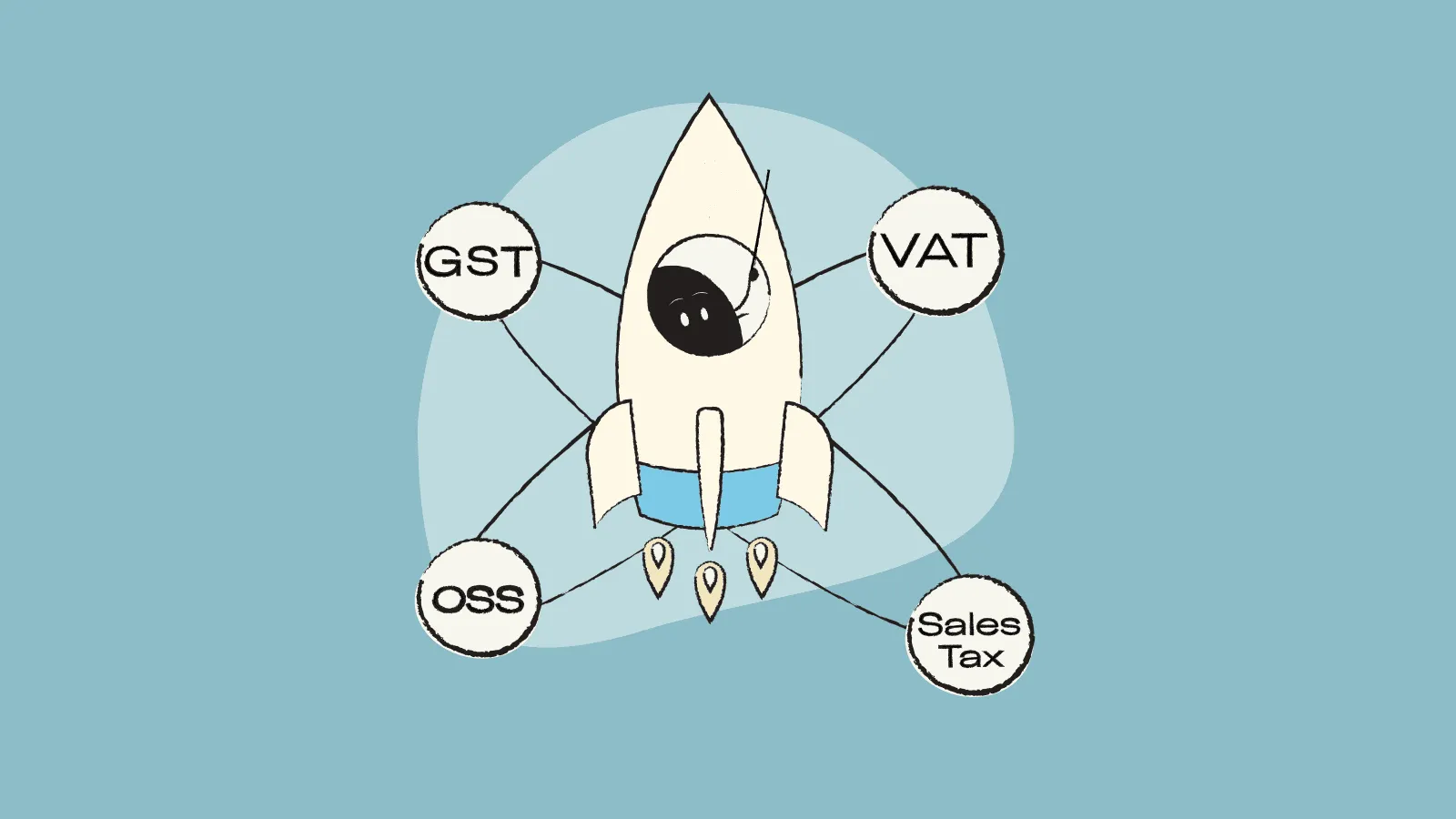
Selling across borders is exciting. It's also a maze of tax rules, including thresholds and acronyms, that can tangle your team fast.
You know, rates shift, and thresholds vary. Some places treat marketplaces one way and direct sales another. Your smooth expansion can turn into a pile of spreadsheets and stress.
Tax compliance shapes pricing, margins, customer trust, and business success.
Don't worry, as this guide tackles what you need to know about global tax compliance for e-commerce businesses. Keep reading to learn how to scale your international sales as smoothly as possible.
Understanding international tax obligations
Operating globally means more than shipping products. It means navigating a complex web of tax rules that vary from country to country.
Understanding digital taxes around the world is critical for e-commerce businesses, as compliance affects pricing, margins, consumer trust, and overall success.
To begin, there are three main families for international e-commerce taxes:
- VAT (value-added tax)
- GST (goods and services tax)
- Sales tax
Global VAT and GST for online sellers are common outside the U.S. They are charged at each stage of the supply chain and landing on the consumer. U.S. sales tax gets added at checkout and varies by state and local jurisdiction.
The rules aren't uniform. See below.
European Union: OSS, IOSS, and cross-border e-commerce VAT
In Europe, the 2021 e-commerce package introduced the One-Stop Shop (OSS) and the Import One-Stop Shop (IOSS) to simplify reporting.
Register in one EU country and report eligible cross-border B2C sales across the bloc through OSS. Use IOSS to handle VAT on low-value imports up to €150. Ensure OSS and IOSS compliance for lesser tax risk!
United Kingdom: First-sale registration rules
In the UK, overseas sellers may need to register from the first sale onward for certain supplies to UK consumers. They have to consider VAT rules for digital services.
There's also a £135 consignment rule for goods sold directly to customers. The UK's guidance spells this out for digital services and overseas goods.
Canada: Federal GST and provincial rules
In Canada, businesses must register for federal GST/HST once they exceed the CAD $30,000 small supplier threshold within 12 months.
Some provinces also impose separate provincial sales taxes (PST) and marketplace tax compliance rules.
Understanding these GST and VAT-style rules for digital services tax is essential for staying compliant as you scale globally.
United States: Economic nexus sales tax
In the U.S., the Supreme Court's South Dakota v. Wayfair (2018) decision opened the door for "economic nexus" rules.
You might owe sales tax in a state based on sales volume or transaction count, even if you have no physical presence there. Most states now enforce some version of these thresholds.
Tax treaties mostly deal with income tax and double taxation for businesses with a permanent establishment in a country, not VAT/GST or sales tax. They still matter for overall planning as you scale.
Key challenges in complying with global e-commerce taxes
Ecommerce or marketplace tax laws around the world in 2026 are layered and fast-changing. They are often inconsistent across borders, making even simple transactions feel complicated.
So, what starts as a straightforward expansion can quickly turn into a compliance puzzle with real financial consequences if you miss a rule or threshold.
That said, here are the real challenges in global tax compliance for e-commerce you should be ready to face:
- Figuring out where you have an obligation to register, collect, file, and remit (nexus, thresholds, marketplace vs. merchant-of-record rules)
- Displaying the right price and tax at checkout for every country or state
- Keeping rates current across thousands of jurisdictions
- Issuing compliant invoices and credit notes, and storing records for the required time (EU OSS users must keep certain records for ten years)
- Filing multiple returns on different calendars, in different formats, in different currencies
- Handling refunds, exemptions, and B2B VAT number validation without manual drudgery
- Surviving sales tax audits, which can arrive long after the sale
Case in point: For an e-commerce business selling custom hoodies internationally, even a small oversight can trigger delays and penalties. Think of applying the wrong VAT rate in the EU or missing a U.S. state's economic nexus threshold. That can cause a major issue in operations!
Managing thousands of tax rates and issuing compliant invoices across multiple countries is challenging without automation. Using a tax engine to calculate rates in real time and generate ready-to-file reports helps ensure compliance while keeping your global sales smooth and profitable.
Remember, penalties for tax non-compliance can devastate profit margins and damage market relationships. We've seen businesses face audits years after transactions. Building robust compliance systems early protects your business and becomes a competitive advantage as you scale.
How to manage tax compliance for global e-commerce
Tax compliance should be part of your e-commerce growth strategy in 2026. Expanding into new markets without a clear compliance plan can quickly erode margins and stall momentum.
You don't need to become a tax attorney to sell internationally. However, you do need a structured system. This should combine automation and technology with expert guidance and internal processes to scale with confidence.
That said, here's how to handle global tax compliance for your e-commerce business:
1. Automate what machines do best
Use a tax engine that detects the buyer's location and applies the correct rate. It should also be able to record the evidence you need. Remember, good software updates rates in the background and prepares country-specific reports.
Samuel Charmetant, Founder at ArtMajeur by YourArt, knows the benefits firsthand. When selling digital artwork internationally, he turned to software automation to simplify tax compliance.
Manual tax management became impossible once we hit multiple markets. Investing in automated solutions changed everything. We went from spending days on compliance to having real-time accuracy across all jurisdictions. Our team could focus on growth rather than spreadsheets.
2. Lean on specialized pros
An international tax advisor will help you decide when and where to register. They will assist you in structuring your returns and pricing. It's like paying for good trail maps before a hike, where you'll avoid most of the cliffs!
That's why Jeffrey Zhou, CEO and Founder of Fig Loans, recommends hiring finance professionals. He suggests working with those specializing in tax compliance for global e-commerce.
Working with specialists in e-commerce tax compliance saves time and prevents costly errors. They give you the confidence to expand into new markets. Their guidance turns complex rules into actionable plans for growth…of course, without the stress of guessing or double-checking every transaction.
3. Build a simple internal playbook
It's crucial to keep up with e-commerce VAT compliance.
For one, determine whether you'll show tax-inclusive pricing in VAT countries and how you handle B2B sales and VAT IDs. Likewise, decide how you'll process refunds and credit notes. Ultimately, keep it short and visible.
Take it from Cris McKee, Founder of GetWorksheets.com. They also maintain an internal playbook for tax compliance, covering collection and calculation, as well as filing and remittance.
Having a simple, clear, and visible playbook ensures everyone on the team knows exactly how to handle tax collection, calculation, reporting, and filing. It reduces mistakes and speeds up the entire process. Ultimately, it gives your business the confidence to scale globally without compliance headaches.
4. Use tech to simplify tax management
The right stack turns tax from a monthly scramble into a background task. E-commerce tax software typically handles:
- Real-time rate calculation with location evidence
- Threshold tracking and alerts so you register before you're late
- Automatic, country-compliant invoices and credit notes
- VAT ID validation for B2B sales
- Ready-to-file reports for OSS/IOSS and state returns
- Multi-currency support and consistent tax display at checkout
- Audit-friendly record storage
Digital platforms like Quaderno can calculate VAT, GST, and U.S. sales tax in real time, automatically issue compliant invoices, track registration thresholds, validate VAT numbers, and generate reports for OSS/IOSS and U.S. returns. They often have plug-and-play integrations with Stripe, Shopify, WooCommerce, and more.
Global tax compliance weighing you down?
Let Quaderno lighten your load by calculating VAT, GST, and U.S. sales tax in real time. Say goodbye to manual tracking—we're confident you won't miss it.
Goodbye manual, hello automaticLong-term benefits of effective tax management
Getting tax right pays off beyond avoiding fines. Here are the potential benefits of tax compliance for the long term:
- Cleaner margins and better forecasting: When your system calculates the correct tax and tracks obligations, you can price with confidence and avoid "surprise" liabilities.
- Smoother customer experience. Accurate totals reduce friction and build trust. In many markets, tax-inclusive pricing is expected. When you match that norm, checkout feels native.
- Faster market expansion. With automation and a known process, entering a new country becomes a repeatable playbook. When partnering with marketplaces and/or distributors, you're less likely to be blocked by compliance questions.
- Audit preparation and readiness. Organized records and standardized invoices make audits faster and far less stressful. That peace of mind is underrated!
The OECD has been steering countries toward destination-based VAT/GST rules for digital trade for years. However, they need more alignment on the big idea (tax where the customer is), though implementation still varies. See countries with VAT below:
| Region | Tax System | Key Countries | Standard Rate |
|---|---|---|---|
| European Union | VAT | Germany, France, Spain, Italy, Netherlands | 17–27% (varies by country) |
| United Kingdom | VAT | United Kingdom | 20% |
| Asia-Pacific | GST | Australia, New Zealand, Singapore, India | 5–18% (varies by country) |
| North America | GST/HST + Sales Tax | Canada, United States | 5–15% GST/HST (CA); 0–10.25% sales tax (US) |
| Latin America | VAT / IVA | Mexico, Brazil, Argentina, Colombia | 10–21% (varies by country) |
Final words
Selling globally doesn't mean wrestling with taxes every week.
Learn the basics of sales tax, including VAT and GST. Know where thresholds and special rules (like the EU's OSS/IOSS and the UK's £135 consignment rule) change your obligations. Then, hand the repeatable work to software and keep a trusted advisor on call for the edge cases.
By doing all these, taxes stop being a blocker. They become a quiet part of your operations that support business growth and happy customers.
Quaderno handles VAT, GST, and U.S. sales tax, such as real-time calculations, compliant invoices, threshold tracking, and ready-to-file reports, all in one place. To speak with an expert today, book a free consultation!
Author's bio: Thanks to Brooke Webber for sharing her expertise and writing this article for us! Brooke brings five years of experience writing on HR, tax compliance, workplace psychology, and financial operations, helping businesses align people strategies with practical finance insights.
Note: At Quaderno we love providing helpful information and best practices about taxes, but we are not certified tax advisors. For further help, or if you are ever in doubt, please consult a professional tax advisor or the tax authorities.
Keep reading

7 tasks your ecommerce business should automate now
Free up time and boost efficiency! Discover the top ecommerce tasks to automate, from invoicing to tax compliance and customer follow-up.

Building Your 2026 Ecommerce Growth Strategy: The Ultimate Guide
Unlock proven ecommerce growth strategies to attract more customers, boost sales, and scale globally without getting lost in tax complexity.