You're here:
Invoice vs Receipt: Which One You Must Issue, by Region
In this article
- Invoice vs receipt: the key differences
- Can a receipt count as an invoice?
- Why instant card payments blur the line
- What compliance actually requires, by region
- What your payment processor actually sends
- What a receipt will not do for your customer
- Which document you have to keep, and for how long
- Issuing the right document, automatically

A customer in Berlin buys your course at 11pm. Your payment processor charges the card, emails them one document with the word Receipt at the top, and you get on with your evening. Three months later their accountant writes asking for a proper VAT invoice with the company VAT number on it. You have no idea whether what you sent was ever a valid tax document.
Invoice vs receipt looks like a vocabulary question. For anyone selling online it is not. The key differences between the two documents matter far less than the thing standard explainers leave out: which one you are actually obliged to issue.
Short answer: An invoice requests payment and carries the tax detail that makes it a legal record of a sale. A receipt confirms that payment happened. One document can do both jobs, but only if it carries everything a compliant invoice requires in your buyer's country.
Which one you owe depends on where your customer is and whether they are a business. It does not depend on what industry you work in.
Invoice vs receipt: the key differences
An invoice asks for money. A receipt says the money arrived. Everything else about invoices and receipts follows from that, including which one your tax authority cares about.
For digital businesses the sequence collapses. A card charged at checkout turns the request for payment and the payment into one event. So read the table below as two sets of content requirements, not two documents in order.
| Aspect | Invoice | Receipt |
|---|---|---|
| Purpose | A request for payment, and the legal record of the sale | Proof of payment |
| Timing | Before, at, or within a set deadline after the sale | After the money moves |
| Legally required content | Prescribed by jurisdiction, and extensive | Light almost everywhere |
| What it proves | That a sale happened and what tax was charged | That a specific amount was paid, and when |
| Role in your tax return | The document your output tax is declared from | Evidence that the sale settled |
| Role in the buyer's tax return | What they need to reclaim the tax you charged | Usually not sufficient on its own |
What is an invoice?
An invoice puts a sale on the record: who supplied which goods or services to whom, for how much, with what payment terms, and with how much tax on top. The fields are not a matter of style. Each jurisdiction prescribes them, and a document missing one stops being a tax invoice while still looking like one. Our guide to what a tax invoice must contain walks the full list.
Invoices come in more than one form, and the form changes what you have to include. There are several types in regular use, from full invoices down to the simplified version small sales often qualify for.
What is a receipt?
A receipt confirms that a payment was received. It usually shows the seller, the date, the goods or services bought, the amount paid and the payment method. Its content requirements are light nearly everywhere, which is why automated systems send it by default: little is demanded, so it is hard to get wrong.
And where does a bill fit in?
A bill is not a third document. It is an invoice seen from the buyer's side of the transaction, carrying the same payment terms. The word changes, the paperwork does not.
Can a receipt count as an invoice?
Not by default, but yes if the content is right. One document can serve as both an invoice and proof of payment when it includes everything a compliant invoice requires and confirms the money was taken.
The word at the top does not decide it. Content does. A document titled Receipt that carries every required field can qualify, and one titled Invoice that omits the buyer's VAT number can fail. It works in reverse: an invoice marked paid, showing the date and method of payment, serves as proof of payment in most regimes.
This is where a lot of published advice goes wrong. You will read that invoices are mandatory in some industries and optional in others. Industry has almost nothing to do with it.
Sell the same $29 subscription to a consumer in one country and to a VAT registered business in another. The identical receipt is fine in the first case and inadequate in the second. What changed was the buyer and the border.
Why instant card payments blur the line
Nearly every explanation assumes a sequence: you issue an invoice, the customer pays weeks later, you send a receipt. That describes an agency billing a client. It does not describe software, digital goods or subscriptions, where the charge and the document happen in the same second and there is nothing to request.
It is often said that digital payments have made receipts obsolete. The truth runs the other way. Instant payments have put receipts to work doing a job that, in many places, only an invoice is allowed to do.
Subscriptions turn a one-off into a pattern. Every renewal issues another document from the same template, so one that falls short of the rules falls short again every month.
Retries add a wrinkle. When a failed charge goes through, what you owe is proof that the original invoice was settled, not a second invoice for the same sale. Issuing a fresh one double counts the transaction in your books and your return.
What compliance actually requires, by region
Plenty of articles concede that the answer depends on your jurisdiction and then stop. So here it is.
Three variables decide it almost everywhere: who the customer is, how much the transaction was for, and whether the country runs a clearance or reporting mandate.
| Regime | Invoice required for B2C? | Invoice required for B2B? | Simplified document allowed below | What the buyer needs it for |
|---|---|---|---|---|
| EU VAT | Not as a rule, except distance selling | Yes, always | EUR 100, or more at national discretion | Reclaiming input VAT |
| UK VAT | On request | Yes, within 30 days, to VAT registered buyers | GBP 250, if the buyer agrees | Reclaiming input VAT |
| Australia GST | On request, above AUD 82.50 | Yes, within 28 days of a request | AUD 1,000 for the buyer's details | Claiming a GST credit |
| New Zealand GST | Taxable supply information, not a tax invoice | Yes, within 28 days of a request | NZD 200 for reduced details | Claiming GST back |
| Canada GST/HST | A receipt is normally enough | Yes, registrants need specified information | Required detail scales with sale value | Claiming an input tax credit |
| US sales tax | No federal requirement | No federal requirement | Not applicable | An exemption certificate on a tax free sale |
| Mandate countries | Varies, and often yes | Yes, in a structured format | Rarely available | A document only valid once cleared or reported |
Consumers and businesses are not the same customer
For a straightforward consumer sale, a receipt is usually all anyone wants. The moment your buyer is a business that intends to reclaim the tax you charged, a compliant invoice carrying their tax number stops being a courtesy.
Under EU rules you need to issue an invoice whenever you supply another business or a non-taxable legal entity. That comes from the Commission's summary of the invoicing rules and Articles 218 to 236 of the VAT Directive. In the UK you need to issue a VAT invoice to any VAT registered customer within 30 days of the time of supply, per VAT Notice 700 section 16. Specifics differ by country: our UK VAT, Australia GST and Canada GST guides cover the local detail.
Small sales often qualify for a simplified document
Most regimes let you send something lighter below a value ceiling, which is why so many online businesses never hit a problem. Sell enough $19 downloads to consumers and a receipt genuinely is enough.
In the EU, simplified invoices are permitted under Article 220a for amounts lower than EUR 100, and countries may allow them more widely under Article 238, with the minimum information set by Article 226b. One carve-out in the Commission's explanatory notes (PDF) matters here: simplified invoices are not allowed for distance sales or cross-border reverse charge supplies. That covers much of what online businesses do.
The rules elsewhere:
- UK: GBP 250, and your customer has to agree
- New Zealand: reduced information below NZD 200, more above it
- Australia: the ATO wants a tax invoice within 28 days of a request unless the sale is AUD 82.50 including GST or less, and the buyer's details are needed only from AUD 1,000
Thresholds are why the shortcut works. A single B2B transaction above one breaks it.
Where the state has to see the invoice first
A growing number of countries no longer accept a document just because you sent it. The invoice has to be issued in a structured format and cleared or reported through an official channel before it counts, so a plain receipt is not an option. If you sell into those markets, read how e-invoicing mandates work before assuming your setup travels.
What your payment processor actually sends
Here is the part nobody checks.
The gap: The document your payment platform emails automatically is a payment confirmation. In most regimes it is not a compliant tax invoice, and it is usually short of at least one required element.
The information that goes missing most often:
- Your own tax registration number
- The buyer's tax number, which B2B transactions need
- A sequential number from an unbroken series
- The tax rate and amount shown separately from the total amount charged
- The place of supply, which determines whose rules apply
- Legal wording, such as a reverse charge statement
Be fair to the platforms: capability is not the problem. Several can produce compliant invoices. The problem is what a self-serve account switches on by default, and that one global template cannot satisfy regimes asking for different information.
UK guidance shows the gap precisely. HMRC accepts that a card sales voucher can serve as a retailer's VAT invoice, but only if you add your VAT number, the rate of VAT and a description of what was sold. The raw voucher does not qualify.
Run the check. Open the last document your platform issued, put it beside the required fields for a tax invoice, and see what is absent.
When your invoices and receipts disagree with your payout reports about the tax you charged, the problem started with the document. That is why reconciling payments surfaces invoicing errors first.
What a receipt will not do for your customer
The cost of getting this wrong mostly lands on your customer, which makes it a commercial problem and not only a tax one.
The limitation: A VAT or GST registered business cannot reclaim input tax on a bare receipt.
The buyer's tax authority will disallow the deduction if the document lacks the required information, including their own registration number. HMRC's own guidance illustrates the point: without a valid VAT invoice the buyer must produce alternative evidence and hope the authority exercises its discretion.
For your business that means a support ticket, a manual reissue, and on larger deals a finance team that will not pay until the paperwork is right.
A receipt also cannot carry legal statements some sales require, such as reverse charge wording or an exemption reference. Nor can it be corrected the same way: once a compliant invoice is out in the world, fixing it means issuing a credit note rather than editing the original. And if you send quotes that look like invoices, a proforma invoice is not a tax document either.
Which document you have to keep, and for how long
Both invoices and receipts matter, for different purposes. The invoice supports the tax you declared, the receipt the payment that settled it. On the sales side, the invoice is the record that must survive an audit.
Retention periods are not set by the EU. Article 247 of the VAT Directive hands that decision to each member state, and they have not converged. The seller's period is set by the country of supply, which means a cross-border seller does not inherit one deadline. You inherit the longest one that applies to anywhere you sell.
That produces the trap. If you sell digital products into the EU through the One-Stop Shop, Article 63c of Regulation 282/2011 requires OSS records to be kept for ten years from the end of the year of the transaction, and that obligation survives leaving the scheme. A sale in March 2026 still has to be available in December 2036. HMRC states the same thing plainly for UK sellers: six years for VAT records, ten if you use or ever used OSS or MOSS. A US seller working from the IRS three-year rule is off by seven years on the same transaction.
| Where you sell | Keep sales invoices for | What people get wrong |
|---|---|---|
| EU, through the One-Stop Shop | 10 years | Counted from the end of the year of the sale, and it still applies after you deregister |
| United States, federal | 3 years, 6 years, or 4 years | 3 is the default, 6 if you under-reported income by more than 25%, 4 for employment tax. State sales tax rules sit on top |
| United Kingdom | 6 years, or 10 on OSS | Self-assessment records run 5 years past the 31 January deadline, which is a different clock again |
| Germany | 8 years | Cut from 10 to 8 in January 2025, but ledgers and annual accounts are still 10 |
| France | 10 years | 6 years for tax, 10 for accounting. The longer one is the one you have to plan for |
| Spain | 6 years | The 4-year tax prescription gets quoted as the answer, but commercial law asks for 6 |
| Italy | 10 years | Applies to electronic invoices in their original form, not printouts |
| Netherlands | 7 years | 10 years where the sale relates to immovable property |
| Canada | 6 years | Counted from the end of the last tax year the record relates to, not the invoice date |
| Australia | 5 years | Counted from when you made the record or finished the transaction, whichever is later |
Periods verified August 2026 against the tax authority or statute in each case. They move, as Germany just demonstrated, so treat the longest number you are exposed to as the working answer rather than trimming down to the shortest.
Two requirements travel with the period and matter more than the number. The record has to stay in its original electronic form, so a PDF re-exported later from a system that no longer holds the source is not the thing the auditor asked for. And under OSS it has to be sendable electronically on request without delay, which makes being able to find it part of the obligation, not just storing it.
Numbering matters too. Invoice numbers must run in an unbroken sequence, and an auditor will ask about gaps. Generating occasional invoices by hand alongside automatic receipts is how gaps appear.
Issuing the right document, automatically
Once you know the rules, this stops being a knowledge problem and becomes a volume one. The decision is small, but it repeats on every transaction and every renewal, in every country you sell into.
At the moment a card clears, something has to work out:
- Where the customer is
- Whether they are a business
- Which document that combination calls for
- What information it must include, and in which language and currency
- Whether it has to be reported
By hand, at volume, that is not realistic.
Quaderno does it from the payment data. It issues the correct invoices and receipts for every transaction, applies the right tax treatment for the buyer's location, keeps your numbering sequential, and stores the record.
One thing to plan for, because no vendor will tell you this: your retention obligation outlives your relationship with whoever stores the records. Quaderno holds every invoice and receipt while your account is active and exports the full set on demand, but a ten-year clock is longer than most software subscriptions last. Whenever you move off a billing or invoicing tool, export the archive on the way out rather than assuming it will still be reachable when an auditor asks.
Get the document right at the moment of the charge and there is nothing to fix later. Start a free trial and see what your next sale produces.
Note: At Quaderno we love providing helpful information and best practices about taxes, but we are not certified tax advisors. For further help, or if you are ever in doubt, please consult a professional tax advisor or the tax authorities.
Frequently Asked Questions
Is a receipt the same as an invoice?
No. An invoice requests payment and carries the tax detail that makes it a legal record of the sale, while a receipt confirms that payment was made. A single document can do both jobs, but only if it carries everything a compliant invoice requires.
Can an invoice serve as a receipt?
In most regimes, yes, provided it is marked as paid and shows the date and method of payment. What decides this is the content of the document, not the word printed at the top of it.
Do I need to issue both an invoice and a receipt?
Usually not. Which document you owe depends on who your buyer is and how much the sale was for, not on your industry. A consumer sale below a simplified invoice threshold generally needs only a payment confirmation, while a registered business that wants to reclaim the tax needs a full invoice showing its own tax number.
Can I issue an invoice after the payment has already been taken?
Yes, and for card payments charged at checkout that is normal. The invoice records the sale and the tax on it. The fact that the money already moved does not remove your obligation to issue one where the buyer or the jurisdiction requires it.
Is the receipt my payment processor sends a valid tax invoice?
Often it is not. Automatic payment confirmations commonly leave out your tax registration number, the buyer's tax number, a sequential document number or a separate tax line, and any one of those omissions can invalidate it. Check the last one your platform sent against the rules for that buyer's country.
What is the difference between an invoice, a bill and a receipt?
A bill and an invoice are the same document seen from opposite sides: what the seller issues as an invoice arrives with the buyer as a bill to pay. A receipt is different again, confirming that the money was actually paid.
Does a receipt work for a B2B customer reclaiming VAT?
No. A VAT or GST registered buyer needs a compliant invoice showing their own registration number and the tax charged separately. A plain payment confirmation will normally see their deduction disallowed.
Keep reading
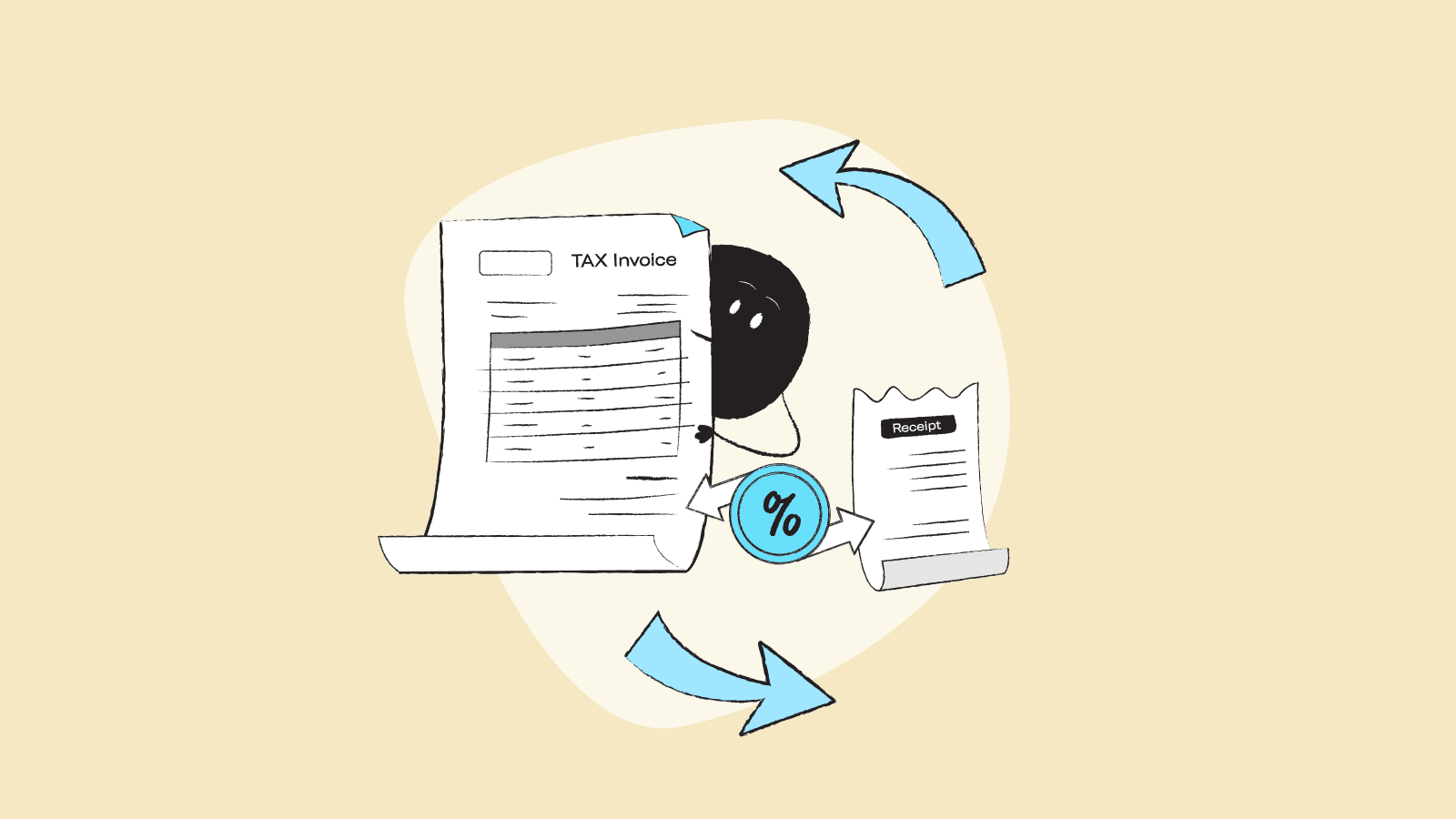
What Is a Tax Invoice? Requirements, Formats & Compliance
What is a tax invoice and why is it required? Learn the key elements, when to issue one, and how to simplify invoicing for VAT, GST & sales tax compliance.
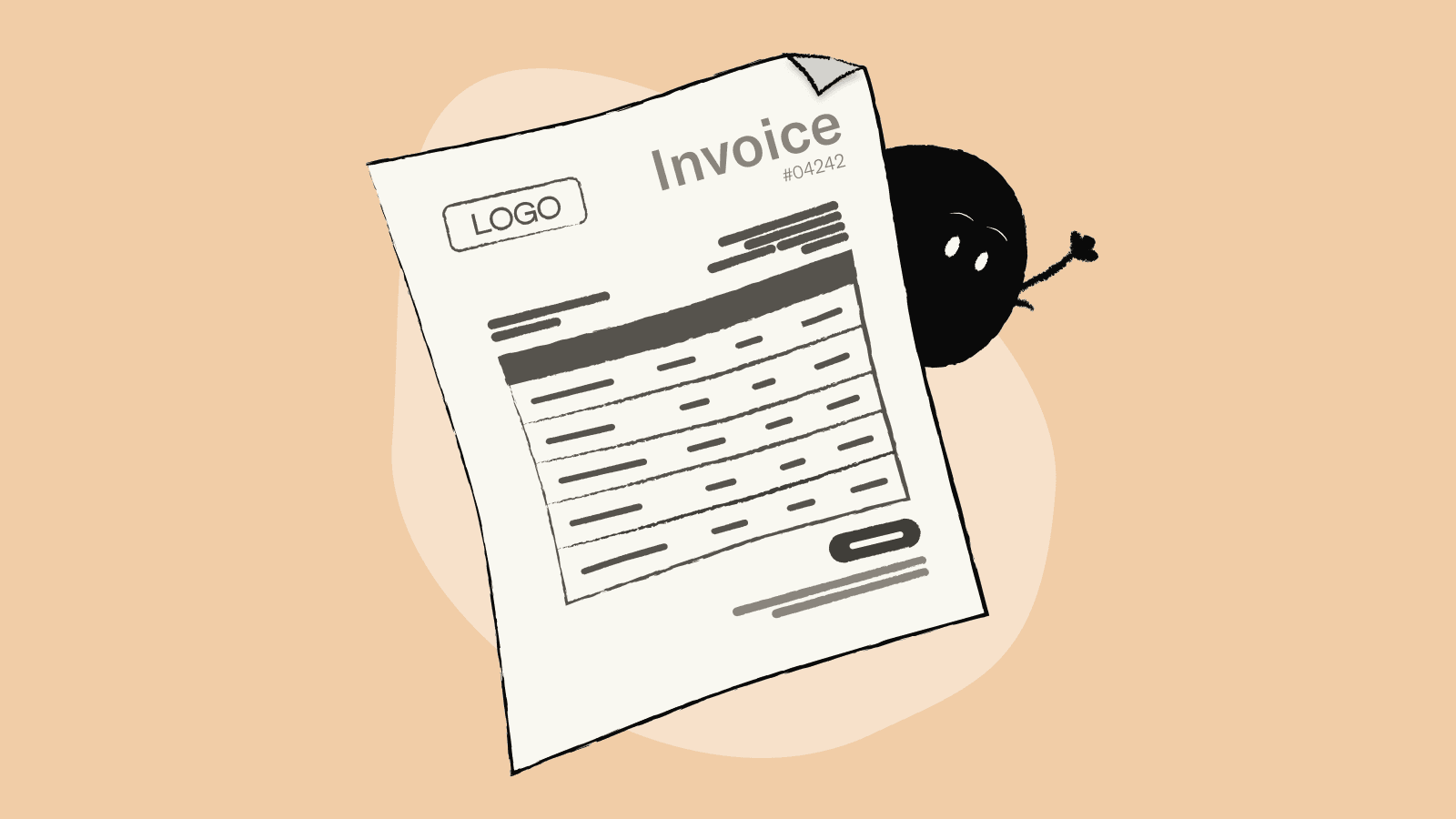
The Most Common Types of Invoices for Your Business
Confused about invoices? Discover the most common types of invoices, when to use each, and how they simplify payments and tax compliance.
Payment Reconciliation: Why Payouts Never Match Invoices
Processors pay out in batches with fees, refunds and third party tax already deducted, so no deposit ever equals an invoice. Here is how to reconcile what actually arrives.

How to handle sales tax for physical products around the world
Selling physical goods? Learn how VAT, GST & sales tax apply globally, and discover tools to simplify compliance across multiple countries.